 EN
EN
What filter matching rule for dust proof cabinet cooling fan operating in cement factories
2026/09/30
Cement cabinets choke on dust. Learn the filter rule for an industrial cabinet cooling fan: G4/F7 media, IP rating, and pre-filter care.

2026/09/05

A chemical raw-material storage warehouse handles solvents, acids, and reactive powders that release vapors during transfer and filling. A reverse incline fan keeps the building pressure where it should be, holding positive zones around clean rooms and negative zones around hazard bays so vapors never migrate into occupied space. Stable pressure also protects product quality and helps a facility pass safety audits.
A bulk chemical distributor in eastern Europe stored acetone, toluene, and caustic flakes in one building. Background: the site ran a single old axial exhaust with no pressure feedback. Problem: during a summer heat wave the make-up air could not keep up, so the building drifted toward positive pressure reverse incline fan, chemical storage ventilation, backward inclined centrifugal fanand solvent vapor leaked through doors into the office corridor. Solution: the plant installed a reverse incline fan with a brushless outer-rotor motor on the fume extraction duct and tied it to a differential-pressure transmitter. Effect: the hazard bay held a steady negative pressure near 15 Pa, odor complaints stopped, and the local OSHA-equivalent inspector closed two repeat findings.
Positive pressure keeps dust, moisture, and outside contaminants out of clean weighing and sampling rooms. Negative pressure keeps hazardous vapors inside the hazard bay where ventilation can capture them at the source. When the pressure balance drifts, vapors mix with ambient air and raise the risk of an explosive atmosphere near ignition sources such as switches and trucks. A well-tuned centrifugal system is the practical way to keep that boundary fixed. Static pressure must stay stable as filters load, or the airflow drops and the protection fails without warning.
Vapors from chemical raw materials are heavier or lighter than air depending on the product, but all of them accumulate when ventilation is weak. A pressure imbalance lets vapor travel from a negative bay into a neutral corridor, where it can reach flammable concentration. In a hazardous location this turns a small leak into reverse incline fan, chemical storage ventilation, backward inclined centrifugal fana deflagration risk near electrical equipment. Continuous airflow at the right cfm, measured against static pressure, keeps concentration below the lower explosive limit. IEC and EN standards for equipment in explosive atmospheres guide the motor and ingress protection rating chosen for the fan.
Filters, dampers, and long duct runs add air resistance that lowers static pressure over time. A forward-curved wheel can overload the motor as resistance rises, tripping thermal overload or burning the winding. Compared with a backward curved centrifugal wheel, the reverse incline fan uses reverse incline fan, chemical storage ventilation, backward inclined centrifugal fana backward-inclined impeller on a non-overloading power curve: drive power peaks then falls as pressure climbs, so the brushless motor draws less current instead of more. That shape protects the winding and keeps ventilation reliable across the duty cycle. Maintenance teams should watch pressure decay across the filter bank and service before efficiency drops.
Chemical storage ventilation is not optional, and several standards shape the design. NFPA 30 sets fire-code expectations for flammable liquid buildings, while OSHA 29 CFR 1910.106 covers vapor control and electrical safety in hazardous areas. For equipment in explosive atmospheres, IEC 60079 and the EN 60reverse incline fan, chemical storage ventilation, backward inclined centrifugal fan079 series define classification and protection methods. Motors and fans placed there need CE and IEC/EN compliance plus the right ingress protection and insulation class. Following these rules turns a pressure balance plan into an auditable, defensible system.
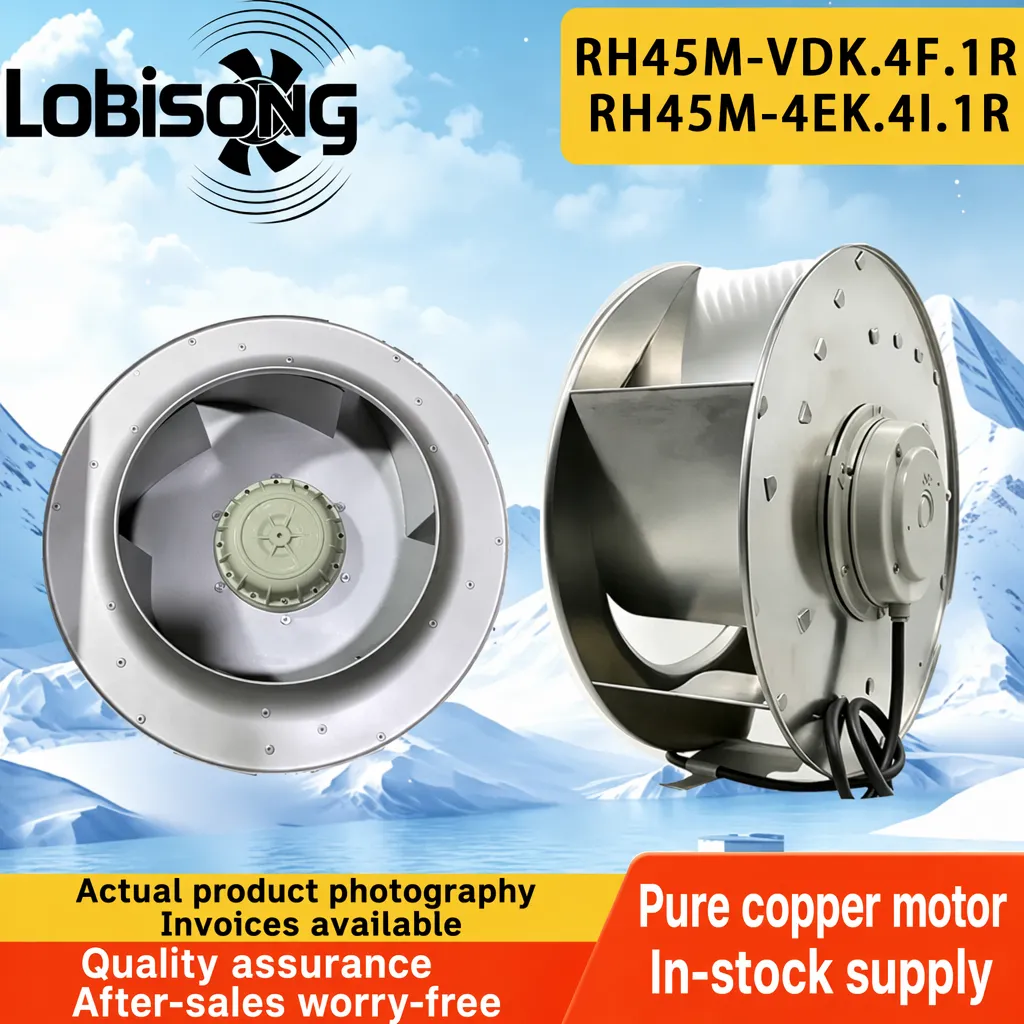
The reverse incline fan earns its name from blades tilted away from the rotation direction. This geometry sheds particles and resists fouling, while the impeller delivers a stable static pressure across a wide airflow band. Because the power curve is non-overloading, the matched brushless outer-rotor motor with pure-copper windings and precision bearings will not surge into overcurrent when the system throttles. The result is predictable pressure balance: the same unit can hold a negative bay and a positive room by changing only the setpoint. CE, IEC, and EN compliance confirms the design was tested for continuous duty in a demanding ambient temperature range.
Pressure balance is held by a control loop, not by chance. A differential-pressure sensor compares the hazard bay to a neutral reference and feeds a VFD that changes fan rpm through PWM or 0-10 V signal. When the bay trends positive, the drive speeds up the reverse incline fan to pull more fume extraction; when it trends negative past setpoint, the loop eases off to save energy consumption. This closed loop keeps static pressure inside a narrow band during door openings, truck loading, and filter loading, so the ventilation effect stays consistent shift after shift.
Buyers should match the fan to the worst-case airflow and static pressure, add margin for filter loading, and request the curve, the non-overloading region, and the IP rating; IP54 suits damp chemical storage, IP44 fits dry rooms. Inspect the impeller material, insulation class, and bearing type, then confirm certification marks—CE, UKCA, CCC, IEC, EN—for the market. The reverse incline fan should be commissioned with the pressure sensor calibrated and the VFD ramp set to avoid surge. In use, log static pressure and noise level weekly; a rising pressure decay or growing vibration signals a clogged filter or worn bearing. Lubrication, seal checks, and a planned spare extend service life past a single season.
Selecting the right reverse incline fan turns pressure control from guesswork into a measured, stable process. Across a chemical raw-material storage warehouse, the backward-inclined impeller holds positive rooms and negative bays, the non-overloading curve protects the motor, and the VFD control loop keeps ventilation and fume extraction inside safe limits. Pair that with NFPA and OSHA-aligned practice, CE/IEC/EN certified builds, and disciplined maintenance to keep the pressure balance where it belongs.
What does a backward-inclined centrifugal fan do in chemical storage? A reverse incline fan moves air in a chemical storage warehouse to keep hazardous bays under negative pressure and clean rooms under positive pressure. Its backward-inclined impeller and non-overloading curve suit fume extrareverse incline fan, chemical storage ventilation, backward inclined centrifugal fanction and pressure balance where vapors, dust, and moisture are present. Paired with a VFD and pressure sensor, the unit holds a stable static pressure as filters load. Proper ventilation reduces the chance of vapor reaching an explosive atmosphere.
Why does a backward-inclined impeller avoid motor overloading? A backward-inclined impeller follows a non-overloading power curve: as system resistance rises and static pressure climbs, the required drive power peaks then falls instead of rising without limit. The brushless outer-rotor motor therefore stays clear of overcurrent and thermal overload even when dampers close or filters clog. This protects the copper windings and bearings, keeping ventilation reliable during long duty cycles in chemical storage where conditions change through the day and the load shifts with weather.
How should pressure balance be controlled in a hazardous location? Pressure balance in a hazardous location is held by a closed loop. A differential-pressure sensor compares the bay to a neutral point and drives a VFD that changes fan rpm to keep the setpoint. When vapor release rises, the loop pulls more airflow; when the bay is stable, it eases to cut energy consumption. Regular sensor calibration and static pressure trend review stop small drifts from becoming ventilation failure during chemical transfer or truck loading.
Where must ventilation and fume extraction meet NFPA and OSHA rules? Ventilation and fume extraction must meet NFPA and OSHA expectations wherever flammable vapors are stored, transferred, or weighed in a chemical warehouse. NFPA 30 covers flammable liquid handling, while OSHA 29 CFR 1910.106 reverse incline fan, chemical storage ventilation, backward inclined centrifugal fanaddresses vapor control and electrical equipment in hazardous areas. IEC and EN standards add equipment requirements for explosive atmospheres, including ingress protection and certification. Designs that follow these rules keep the pressure balance and protect workers during routine and emergency operations alike.

2026/09/30
Cement cabinets choke on dust. Learn the filter rule for an industrial cabinet cooling fan: G4/F7 media, IP rating, and pre-filter care.

2026/10/07
Right wall-mount height for an industrial axial exhaust fan: room volume, free clearance, brackets, and recirculation control.

2026/10/08
An ec motor fan links to BMS via Modbus, 0-10V and PWM for demand-based cooling, energy scheduling and automatic sensor-driven speed control.

2026/10/06
A radial exhaust fan removes grease, fumes, and odors from food-processing workshops with capture velocity and hygienic washdown design.
2026/10/05
Learn antistatic treatment for industrial cabinet cooling fan in electronics workshops—ESD-safe housing, ionizable plastics, and cleanroom compatibility.

2026/10/04
Discover how a brushless dc servo delivers precise wind speed control for laboratory cooling fans with closed-loop PID feedback and laminar airflow.
