 EN
EN
What filter matching rule for dust proof cabinet cooling fan operating in cement factories
2026/09/30
Cement cabinets choke on dust. Learn the filter rule for an industrial cabinet cooling fan: G4/F7 media, IP rating, and pre-filter care.

2026/09/10
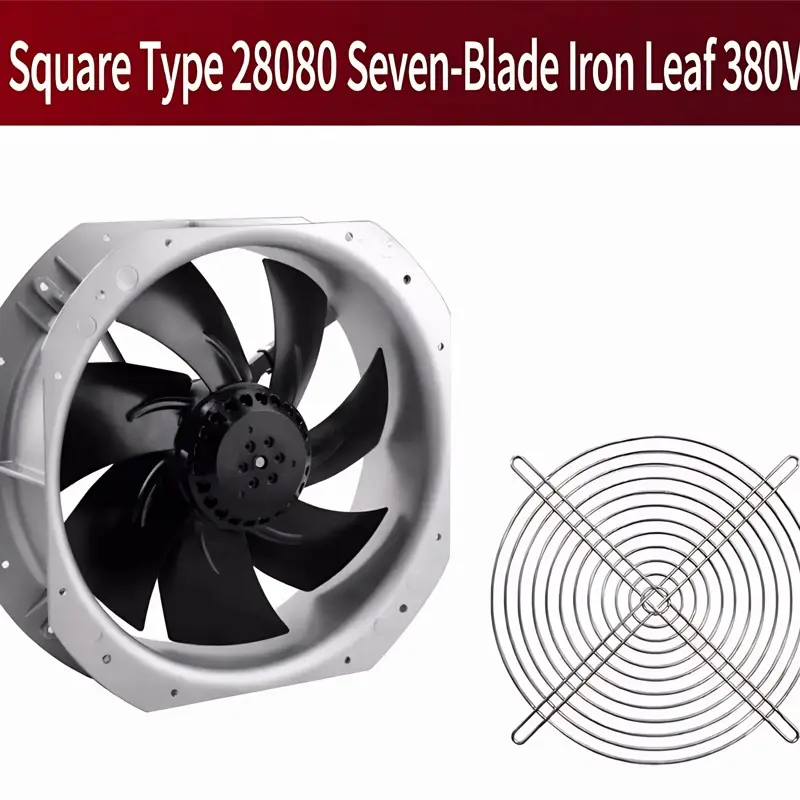
Control equipment rooms concentrate relays, drives and PLCs inside sealed enclosures, and the heat they release demands continuous ventilation. A quiet cabinet cooling fan keeps the cabinet cooling fan airflow steady while holding the acoustic load low, so technicians near the panel avoid a constant mechanical hiss during a long shift.
Several mechanisms make a cabinet cooling fan audible at once. Blade tips cut the air and shed vortices, producing broadband aerodynamic noise that grows with tip speed. The motor adds an electromagnetic hum, and the bearing contributes friction tones that rise as it wears. A quiet cabinet cooling fan is engineered to attack each path rather than mask one. Aerodynamic noise drops with blade count and tip clearance tuned for laminar airflow; motor noise is suppressed by brushless construction; bearing noise is held by precision bearings and tight balance. Knowing the source is the first step to a calmer control room.
Human hearing is not linear, so the decibel scale uses A-weighting, written dB(A), to match ear sensitivity. A normal conversation sits near 60 dB(A); a control room with several small fans can drift toward 65–70 dB(A), read by the brain as irritation rather than danger. OSHA 29 CFR 1910.95 sets exposure limits at 85–90 dB(A) for an eight-hour shift, and steady cabinet noise near that band adds to the operator's daily dose. A few dB(A) of reduction changes how a space feels through a long shift.
The bearing type is the largest factor in long-term quiet performance. Sleeve bearings rely on a lubricant film and run quietly when new, but friction and wear climb as the oil dries, so the noise level rises within months. Ball bearings use rolling elements with far lower friction, holding a stable hum for years and tolerating higher rpm without tonal whine. For a ventilation point that must stay silent through a multi-year cycle, a ball-bearing silent fan is the safer structural choice. Precision impeller balance also prevents the low-frequency rumble that sleeve units develop late in life.
A brushless motor removes the commutator that causes sparking and buzz in older designs. A quiet cabinet cooling fan with this motor form, paired with pure-copper windings and an outer-rotor construction, delivers smooth torque and steady rpm, keeping the emitted pitch constant instead of an annoying squeal. Stable rpm also means the airflow the cabinet needs arrives without sudden speed changes that draw attention. Constant-frequency sound is far less fatiguing than a motor that surges and settles through the day.
Noise is not only air-borne; it travels through structure. A cabinet fan bolted directly to thin sheet metal passes vibration into the wall, which then radiates sound like a cone and amplifies the perceived noise level. A quiet cabinet cooling fan mounted on rubber grommets, isolator bushings or a damped frame breaks that path and keeps energy in the fan rather than the enclosure. ISO 14694 covers vibration limits for industrial fans and helps set acceptance values, since a well-isolated unit protects operator comfort and nearby relays and sensors.
Running a fan at full speed under light thermal load wastes energy and raises noise for no gain. A quiet cabinet cooling fan with PWM speed control modulates rpm to match the actual heat, spinning slowly through most of the day and accelerating only at peak load. A tacho output reports true rpm to the controller, closing the loop so the fan never overspeeds. With this control the sound power stays low and predictable; ISO 9614 describes how sound power is measured, giving buyers a comparable figure for a quiet server room or control room.
Specify the declared noise level in dB(A) and confirm it follows ISO 4871, so the figure is trustworthy rather than marketing. Verify the bearing type, motor form, voltage and the IP44/IP54 protection rating for the environment. Ask for CAD drawings and CE or UKCA documentation where required, and confirm consistent batch quality from automated production. A quiet cabinet cooling fan chosen on these objective criteria performs as expected from the first day of service.
Silence fades when dust loads the blades or the mounts loosen. Inspect every few months: clean the impeller, confirm the rubber isolators are intact, and read the tacho to confirm rpm matches the set point. A rising noise level usually signals a worn bearing or an unbalanced blade, both fixable before they disturb the room and the operator.
A panel builder for a municipal water-treatment site got repeated noise complaints from an adjacent control room. The original sleeve-bearing fans exceeded 60 dB(A) after a year of service. The builder replaced them with brushless, ball-bearing cabinet cooling fan units on rubber isolators and set PWM control to track load. Follow-up checks showed the room near 50 dB(A), and fatigue reports dropped with no loss of ventilation.
Keeping matched spares from a supplier with steady panel-builder repeat-purchase history preserves the original acoustic and thermal specification without re-engineering the enclosure.
A quiet cabinet cooling fan improves the control-equipment-room environment by attacking noise at its sources: aerodynamic blade design, brushless motors, precision ball bearings and vibration-isolated mounts. Lower dB(A) output reduces operator fatigue, supports workplace noise compliance, and protects nearby electronics from structural vibration. Selecting on declared noise level, bearing type and PWM control, then maintaining the unit on a fixed schedule, keeps the working environment calm and the ventilation reliable for years.
What noise level is acceptable for a control room fan?
Answer: Most control rooms target 45–55 dB(A) at the operator position. OSHA 29 CFR 1910.95 limits occupational exposure to 85–90 dB(A) over eight hours, so a quiet cabinet cooling fan should stay well below that band. Specifying the declared dB(A) per ISO 4871 lets buyers compare models on a trusted basis and avoid units whose noise level drifts upward as bearings wear.
Why does bearing type affect how quiet a cabinet fan stays?
Answer: Sleeve bearings run quietly when new but friction and noise climb as lubricant dries, often within months. Ball bearings use rolling elements with far lower friction, holding a stable hum for years and tolerating higher rpm without tonal whine. For a ventilation point expected to stay silent across a long maintenance cycle, a ball-bearing silent fan avoids the rising noise level that sleeve units develop near end of life.
How does PWM control lower fan noise?
Answer: PWM speed control modulates rpm to match the actual thermal load, so the unit spins slowly through most of the day and accelerates only during peak heat. A tacho output reports true rpm to the controller, closing the loop so the fan never overspeeds. Because sound power rises with speed, running at the minimum needed rpm keeps the cabinet cooling fan quiet and predictable while still protecting the equipment from overheating.
Which standards apply to fan noise declaration?
Answer: ISO 4871 governs how manufacturers declare and verify noise values, giving buyers a trustworthy dB(A) figure instead of a marketing claim. ISO 14694 sets vibration limits for industrial fans, relevant because structural vibration raises the perceived noise level in a control room. ISO 9614 describes sound power measurement, allowing fair comparison between models. Specifying these in procurement prevents surprises and supports a calmer working environment.
How often should a cabinet fan be inspected to stay quiet?
Answer: Inspect every few months: clean the impeller, confirm rubber isolators are intact, and read the tacho to verify rpm matches the set point. A rising noise level usually signals a worn bearing or unbalanced blade, both fixable before they disturb operators. Keeping matched spare units from the original supplier ensures any replacement preserves the acoustic and thermal specification without re-engineering the enclosure.

2026/09/30
Cement cabinets choke on dust. Learn the filter rule for an industrial cabinet cooling fan: G4/F7 media, IP rating, and pre-filter care.

2026/10/07
Right wall-mount height for an industrial axial exhaust fan: room volume, free clearance, brackets, and recirculation control.

2026/10/08
An ec motor fan links to BMS via Modbus, 0-10V and PWM for demand-based cooling, energy scheduling and automatic sensor-driven speed control.

2026/10/06
A radial exhaust fan removes grease, fumes, and odors from food-processing workshops with capture velocity and hygienic washdown design.

2026/10/05
Learn antistatic treatment for industrial cabinet cooling fan in electronics workshops—ESD-safe housing, ionizable plastics, and cleanroom compatibility.

2026/10/04
Discover how a brushless dc servo delivers precise wind speed control for laboratory cooling fans with closed-loop PID feedback and laminar airflow.
