 EN
EN
What filter matching rule for dust proof cabinet cooling fan operating in cement factories
2026/09/30
Cement cabinets choke on dust. Learn the filter rule for an industrial cabinet cooling fan: G4/F7 media, IP rating, and pre-filter care.

2026/09/14
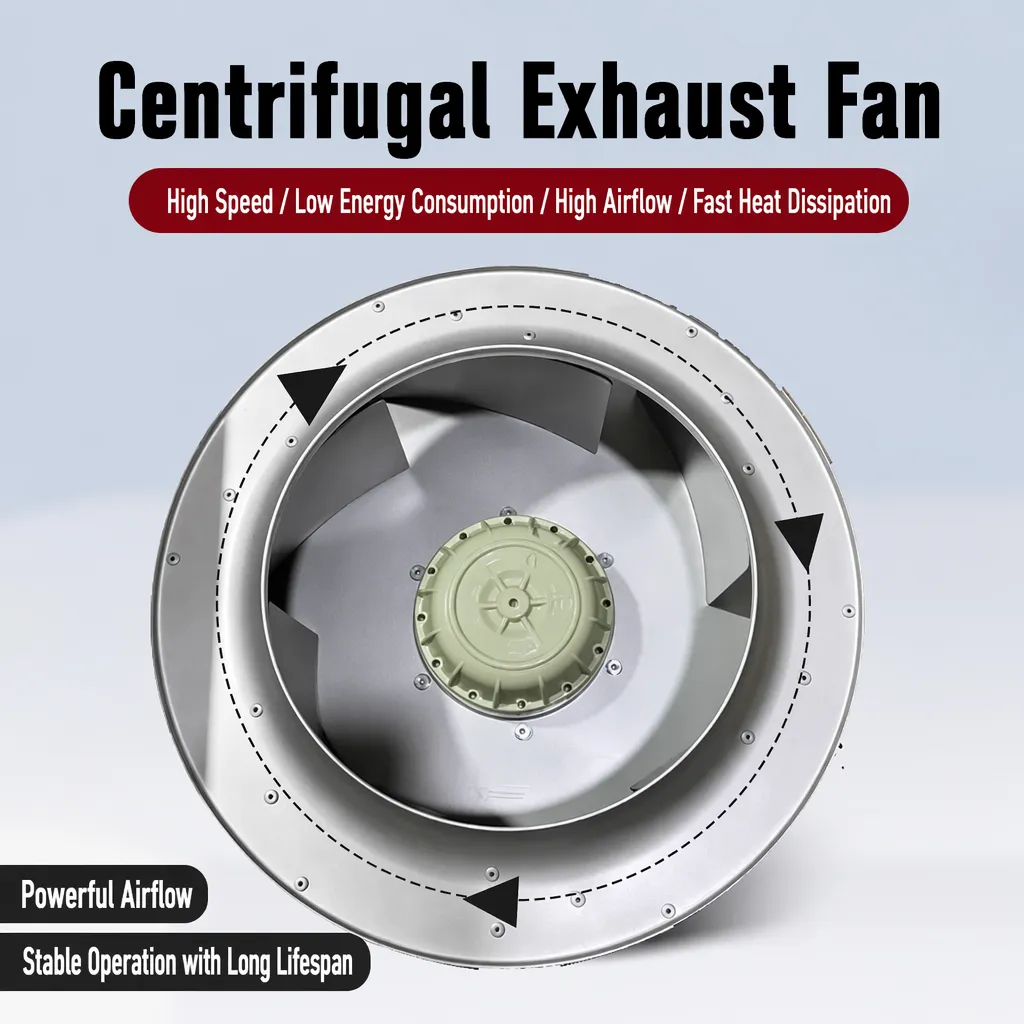
Humid industrial workshops attack ordinary fans fast, yet a stainless steel backward curved fan keeps cooling steady where chlorinated washdown and tropical air would eat coated steel in a single season.
A standard coated mild-steel unit often survives only a few months before rust blooms across the housing. In a paper mill, plating line, or tropical packaging plant, a stainless steel backward curved fan keeps the impeller intact because the alloy resists the chloride attack that eats ordinary steel. Chromium in the steel forms a thin passive oxide layer that self-heals when scratched, blocking moisture at the surface. Carbon steel lacks this film, so once the paint cracks the base metal rusts exponentially. The backward curved blade profile also sheds condensate instead of trapping it in pockets where pitting begins. In a saturated atmosphere, that difference decides whether a fan lasts a season or several years of continuous duty.
When a galvanized blower rusts through, imbalance grows and vibration climbs sharply. Bearings seize, the motor overheats, and an entire enclosure loses cooling. In food or chemical plants, flaking rust also contaminates the product stream, triggering a shutdown that costs far more than the fan itself. Humidity accelerates every one of these failure paths, and thermal cycling between hot process air and cool washdown widens cracks in weak protective paint.
A Southeast Asian HVAC integrator cooling a tropical packaging plant reported chronic rust on carbon-steel fans within a single season. After switching to a stainless steel backward curved fan, steady low-noise operation returned and procurement cost fell across the equipment service life. The engineering team gave pre-design selection advice on alloy grade, coating system, and IP rating, matching the fan to the actual corrosive load rather than guessing from a catalog.
Grade 304 stainless handles general humidity and mild detergents well, and it suits most indoor workshops with occasional damp. When the workshop washes down with chlorinated water or processes salt, 316 adds molybdenum for stronger pitting resistance. Specifying a stainless steel backward curved fan with the right grade up front avoids premature impeller replacement and keeps airflow stable. Lobisong supports OEM customization on alloy choice, weld method, and surface finish for the duty.
Beyond the base alloy, passivation removes free iron from the surface so only clean chromium-rich metal faces the airstream. A fluoropolymer or epoxy coating then adds a barrier against acids and solvents. For aggressive chemical vapors, a duplex system pairs the stainless steel backward curved fan body with a topcoat, extending service life where bare metal would slowly degrade. Smoother coatings also shed water faster and collect less dust on the blade. A qualified supplier documents coating thickness and adhesion so the buyer can verify the barrier will not blister under thermal cycling.
Corrosion often starts at joints rather than on flat panels. IP54-rated shaft seals and closed-cell gaskets block humid air from the motor chamber, while a drain path stops condensate from pooling at the base. A properly sealed bearing housing keeps lubricant clean, so bearing life holds even when ambient humidity stays high for months. EN and CE markings confirm the enclosure meets European directives for ingress protection in wet duty. Selecting a fluorocarbon or silicone gasket rated for the workshop temperature range prevents the seal from hardening and opening a path for vapor. A drain vent at the lowest point also lets any ingress escape before it reaches the bearing, a small detail that protects the whole drive train.
The stainless steel backward curved fan profile moves air with low turbulence and naturally throws off water films during washdown. Smooth welded seams remove crevices where moisture pools and bacteria grow. This geometry, combined with stainless material, keeps the rotor balanced and noise low across the operating range, which matters for continuous-duty ventilation near workers. Fewer stagnant films also mean slower corrosion and steadier static pressure over time. Because the backward curved wheel is inherently efficient at moderate pressure, the motor draws less current for the same airflow, which reduces heat that would otherwise stress seals and insulation in a damp environment. That efficiency gain supports reliable cooling without raising the corrosion risk elsewhere in the system.
An external-rotor motor with imported precision ball bearings tolerates damp better than open frames, and pure copper windings resist the heating that weakens insulation in humid air. Sealed-for-life bearings need no relubrication that would expose internals to vapor. Pairing the unit with an EC drive also allows soft start, reducing mechanical shock that cracks protective coatings and shortens bearing life in humid service. Good motor sealing is as important as the impeller alloy.
Check the impeller weld finish, confirm the alloy certificate, and verify the IP rating against the workshop washdown class before purchase. Ask for a salt-spray test report on the coating and a gasket material list. These checks separate a true corrosion-resistant stainless steel backward curved fan from one merely painted to look the part on the surface. A short factory audit saves far more than it costs once the unit runs in a wet line.
Choosing the right ventilation hardware for a corrosive environment pays back through fewer shutdowns and stable cooling. A stainless steel backward curved fan pairs alloy grade, protective coating, and tight sealing to survive humidity that destroys ordinary steel. Specifying 304 or 316 early, validating seals, confirming certifications, and matching the duty to the airstream chemistry keeps the air moving where it matters most in the workshop.
What makes stainless steel resist corrosion in a humid workshop?
Answer: A stainless steel backward curved fan forms a passive chromium oxide layer that self-heals when scratched, blocking rust even in saturated air. In a humid workshop, this passive film stops chloride and moisture from reaching the base metal. Grade 316 adds molybdenum for extra pitting resistance near salt or chlorinated washdown. Paired with sealed joints, the material keeps the impeller structurally sound far longer than coated carbon steel in wet duty.
When should a buyer choose 316 over 304 stainless?
Answer: Choose 316 when the workshop uses chlorinated water, brine, or aggressive chemicals in the airstream. The molybdenum content resists pitting that 304 can develop in those conditions. For general humidity and mild cleaning, 304 is adequate and lower cost. Matching the alloy grade to the actual corrosive load avoids overspending while preventing early impeller failure and unplanned cooling shutdowns on the production line.
How do seals and coatings extend fan service life?
Answer: Coatings such as epoxy or fluoropolymer add a barrier against acids and solvents, while passivation cleans free iron from the surface. IP54 shaft seals and closed-cell gaskets stop humid air entering the motor chamber, protecting bearings and windings. Together these measures keep lubrication clean and maintain bearing life, so the unit keeps running through wet, corrosive duty cycles without frequent teardown or replacement of internal parts.
Can a backward curved profile help with condensate?
Answer: Yes. The backward curved blade shape sheds water films rather than trapping them in pockets, and smooth welded seams remove crevices where moisture pools. Less standing water means slower corrosion and a cleaner impeller. Combined with stainless material, the profile helps the rotor stay balanced and keeps noise low, which matters in continuous-duty ventilation near operators who need a quiet, reliable cooling system.
Which certifications confirm a corrosion-resistant fan is compliant?
Answer: CE and UKCA markings show the product meets European health, safety, and environmental directives for industrial equipment. EN standards define enclosure and ingress protection classes buyers should verify. Requesting an alloy certificate and a salt-spray test report on any coating confirms the claimed grade. These documents give procurement teams objective proof rather than relying on appearance alone when specifying ventilation for corrosive workshops.

2026/09/30
Cement cabinets choke on dust. Learn the filter rule for an industrial cabinet cooling fan: G4/F7 media, IP rating, and pre-filter care.

2026/10/07
Right wall-mount height for an industrial axial exhaust fan: room volume, free clearance, brackets, and recirculation control.

2026/10/08
An ec motor fan links to BMS via Modbus, 0-10V and PWM for demand-based cooling, energy scheduling and automatic sensor-driven speed control.

2026/10/06
A radial exhaust fan removes grease, fumes, and odors from food-processing workshops with capture velocity and hygienic washdown design.

2026/10/05
Learn antistatic treatment for industrial cabinet cooling fan in electronics workshops—ESD-safe housing, ionizable plastics, and cleanroom compatibility.

2026/10/04
Discover how a brushless dc servo delivers precise wind speed control for laboratory cooling fans with closed-loop PID feedback and laminar airflow.
