 EN
EN
What filter matching rule for dust proof cabinet cooling fan operating in cement factories
2026/09/30
Cement cabinets choke on dust. Learn the filter rule for an industrial cabinet cooling fan: G4/F7 media, IP rating, and pre-filter care.

2026/09/08
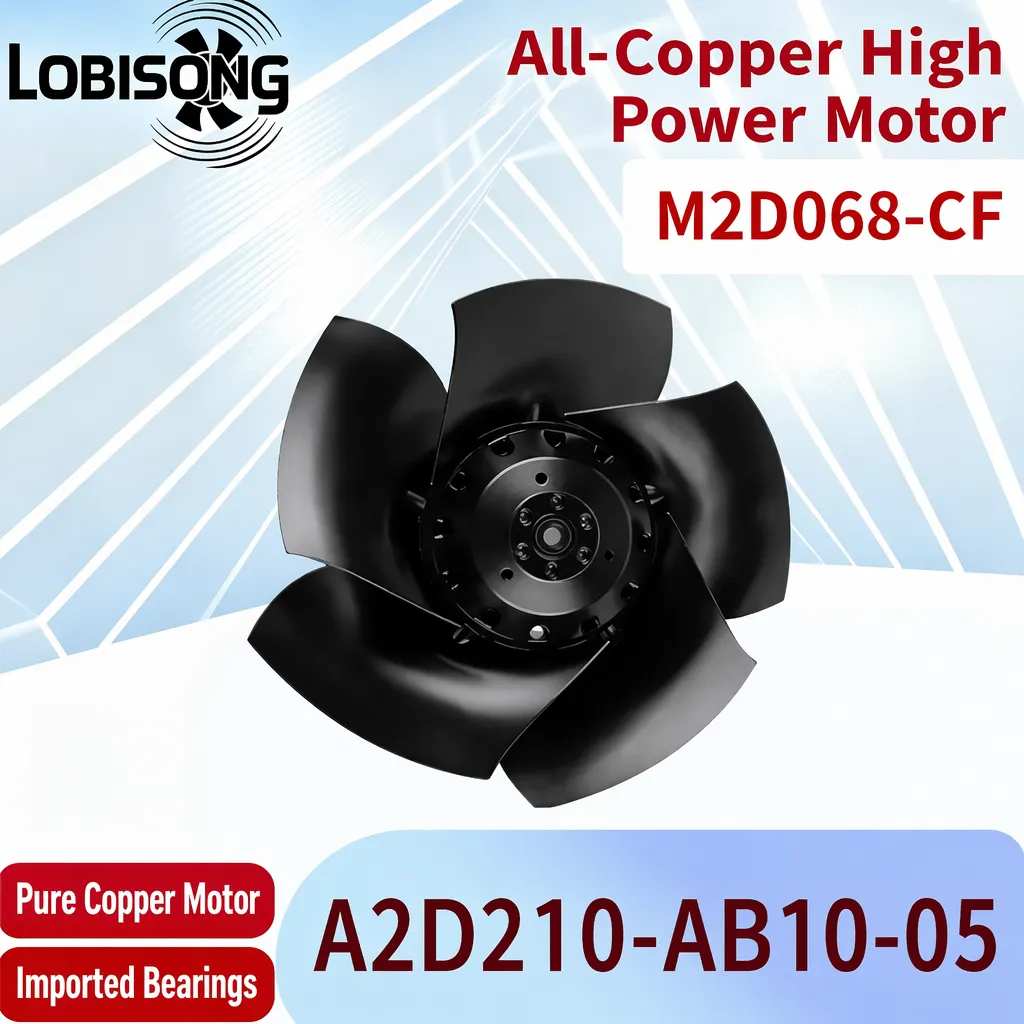
Variable speed ec fans change airflow on their own by reading the room, not by waiting for a person to flip a switch. When a temperature sensor reports a rising load, the controller trims the speed so the space stays in band without wasted energy. That closed-loop behavior is what makes modern cooling both stable and efficient.
A small server room cooled by a single fixed-speed fan swung between too cold and too warm. The facility lead suspected the issue was control, not capacity, and asked whether variable speed ec fans could hold the setpoint instead of lurching around it. The brief was simple: stop the swings and stop the energy drain from running flat out all day.
The team fitted a temperature sensor at the hot aisle and wired it to the fan controller. Now the system saw conditions as they changed, second by second, instead of acting on a stale thermostat reading from the wall. Real-time data gave the loop something true to track, which is the first requirement for any automatic adjustment to work.
Once the loop closed, the fans eased up the moment load dropped and spun up the instant heat rose, never overshooting. The room held a tight band through the daily load curve. Energy use fell because the units no longer ran at full speed during quiet hours. The change needed no new ductwork, only a sensor, a controller, and variable speed ec fans matched to the job.
A fixed-speed unit can only be on or off, so it cools in bursts that overshoot the target and then coast. That oscillation wastes energy and stresses compressors and electronics alike. Running flat out also draws more power than the load needs for most of the day. Variable speed ec fans avoid this by matching output to demand instead of lurching between states. The waste is hidden inside a stable-looking average, which is why many sites never notice the cost until a bill or a failure forces a look.
Repeated thermal cycling ages components faster than steady heat does. A server or drive that cools and warms all day sees solder and connectors expand and contract, inviting fatigue. Humidity control also suffers when air volume lurches. Without a feedback loop that modulates airflow, the space drifts, and the equipment pays the price in shorter life and occasional trips that interrupt the work.
The temperature sensor is the eyes of the system. It feeds a measured value into the controller, which compares it to the setpoint and drives the fan to close the gap. This feedback loop runs continuously, so the response tracks the real condition rather than a guess. A clean sensor placement at the true hot spot is what keeps the loop honest and prevents it from chasing a reading that no longer matches the load.
The controller applies a PID routine that balances present error, accumulated error, and the rate of change to set the right speed. Modulation then varies the output smoothly instead of stepping between states. Good tuning avoids both sluggish response and nervous hunting. The controller is the brain; variable speed ec fans are the muscle that turns its decision into actual airflow, and the two must be tuned as one system.
The controller speaks to the fan through a 0-10V signal or a PWM line, both of which set speed without the losses of a mechanical throttle. A closed loop means the command and the result are constantly reconciled, so a blocked filter or a warmer day is met with more airflow, not a silent shortfall. Holding the loop intact is what keeps the automatic behavior reliable across seasons and loads.
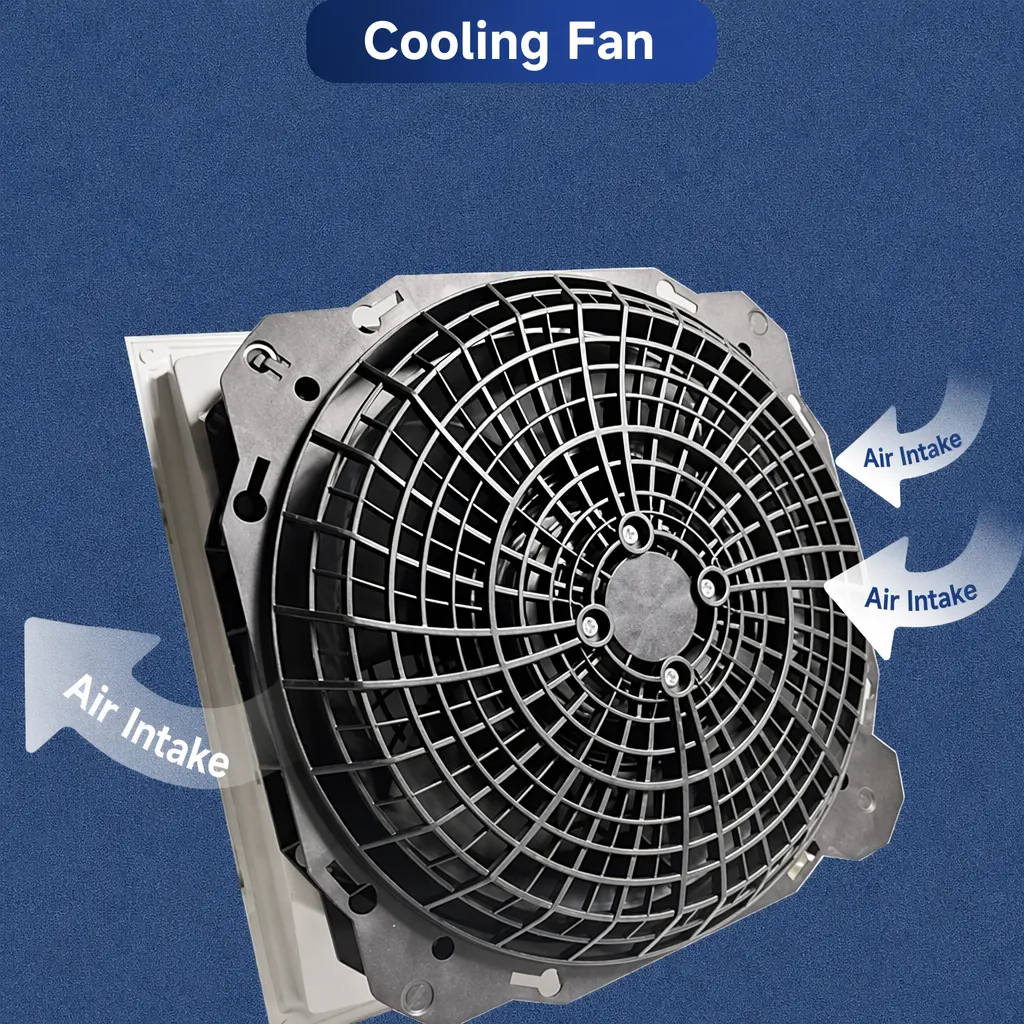
Building and machinery standards such as ASHRAE thermal guidance, IEC 60034 for rotating machines, and NFPA 79 for machine safety frame how such systems are specified and wired. They do not write the control logic, but they set the bar for safe integration and rated performance. A spec that cites them gives the buyer a defensible basis to accept the unit and a common language with the supplier during commissioning.
Buyers should ask for a stated control input, a temperature sensor location, and a commissioning check that proves the loop holds the band. Confirm the variable speed ec fans are tuned as part of that loop, not as separate boxes. In service, keep the sensor clean and verify the setpoint still fits the equipment duty. Log a week of temperature and speed data so drift shows early. A short annual review of the feedback loop and the controller tuning keeps the energy saving real and the room stable.
Variable speed ec fans keep a space in band by reading real-time temperature data and adjusting airflow through a closed loop. The temperature sensor, PID controller, and modulated 0-10V or PWM signal together turn a fixed burden into a responsive, efficient system. The result is steadier conditions, lower energy use, and longer equipment life. Specifying and checking the loop keeps the benefit working year after year.
Question: How do EC fans adjust airflow automatically? Answer: Variable speed ec fans read a temperature sensor and feed the value to a controller that compares it to the setpoint. A PID routine sets the speed, and a 0-10V or PWM signal drives the fan without throttle losses. The closed feedback loop reconciles command and result continuously, so airflow tracks the real load. The units ease off when cool and spin up when hot, holding the band automatically.
Question: What does a temperature sensor actually control? Answer: The temperature sensor measures the true condition at the hot spot and sends it to the controller as the measured value. The controller uses that reading to decide fan speed through the feedback loop. A well-placed sensor prevents the system from chasing a stale wall reading. Without an accurate sensor, even a good PID controller modulates against the wrong target and the room drifts.
Question: Why is a closed loop better than on-off cooling? Answer: On-off cooling lurches between full speed and stop, overshooting the setpoint and wasting energy. A closed loop modulates airflow so the space settles into a tight band instead of swinging. The result is steadier temperature, less thermal cycling of equipment, and lower power draw. Smooth modulation also reduces wear on the fan and the load it protects.
Question: Can the control input be 0-10V or PWM? Answer: Yes. Both 0-10V and PWM are common ways for the controller to set fan speed without the losses of a mechanical throttle. The choice depends on the controller and the drive. Either signal supports a closed loop when paired with a temperature sensor and tuning. Confirm the supported input before purchase so the feedback loop can drive the fan as intended.
Question: How is the automatic system maintained? Answer: Keep the temperature sensor clean and confirm its location still reflects the hot spot. Log temperature and speed data for a week each year to catch drift in the feedback loop or controller tuning. Re-check the setpoint against the current equipment duty. A short commissioning-style review preserves the energy saving and keeps the room stable without surprising trips or wasted power.

2026/09/30
Cement cabinets choke on dust. Learn the filter rule for an industrial cabinet cooling fan: G4/F7 media, IP rating, and pre-filter care.

2026/10/07
Right wall-mount height for an industrial axial exhaust fan: room volume, free clearance, brackets, and recirculation control.

2026/10/08
An ec motor fan links to BMS via Modbus, 0-10V and PWM for demand-based cooling, energy scheduling and automatic sensor-driven speed control.

2026/10/06
A radial exhaust fan removes grease, fumes, and odors from food-processing workshops with capture velocity and hygienic washdown design.

2026/10/05
Learn antistatic treatment for industrial cabinet cooling fan in electronics workshops—ESD-safe housing, ionizable plastics, and cleanroom compatibility.

2026/10/04
Discover how a brushless dc servo delivers precise wind speed control for laboratory cooling fans with closed-loop PID feedback and laminar airflow.
