
 EN
EN
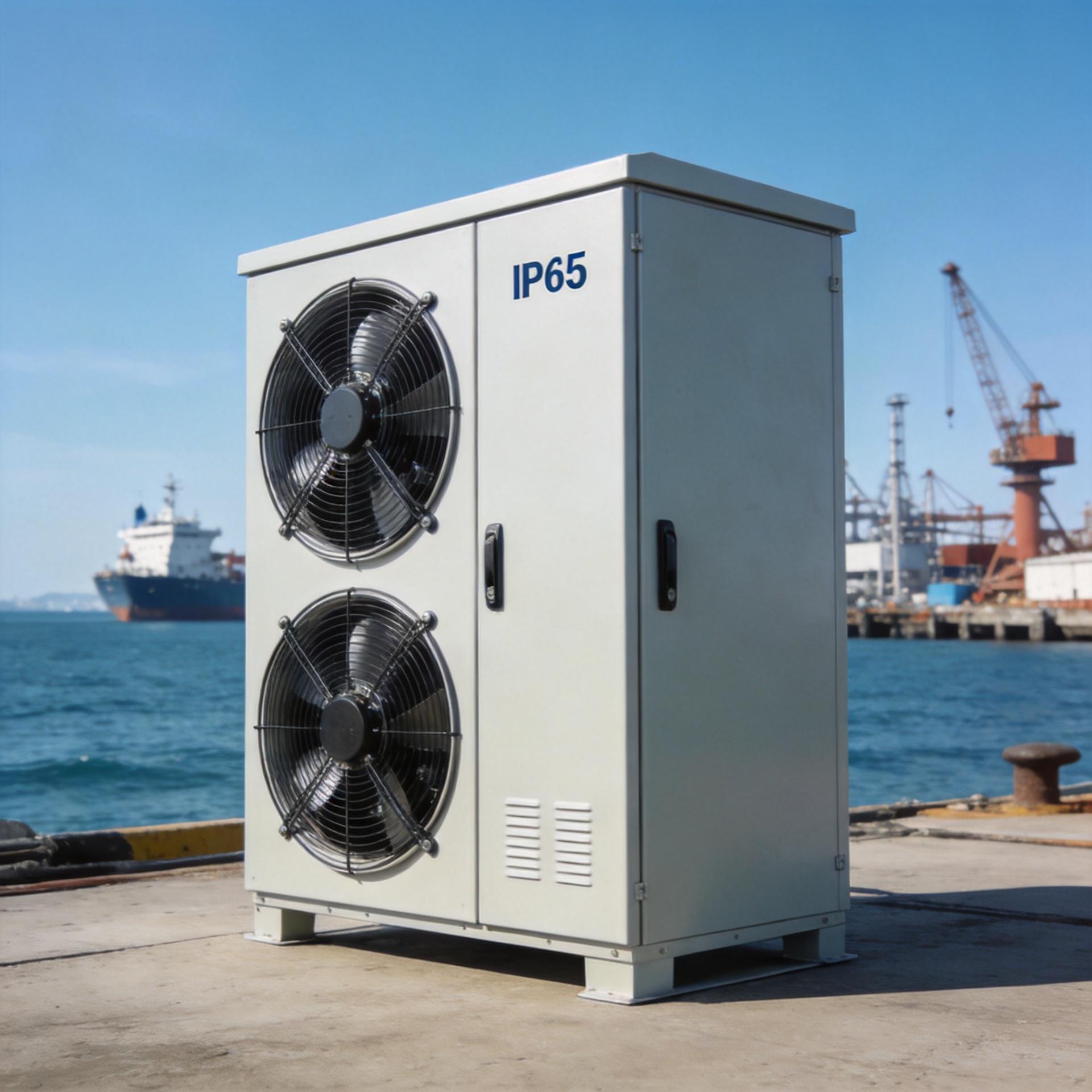
Why Waterproof Cabinet Ventilation Fan Work Steadily in Coastal Salt Fog Environment
When I first started evaluating cooling solutions for outdoor electrical enclosures in coastal industrial zones, I made the same mistake most engineers make: I focused almost entirely on airflow specs and RPM ratings. It wasn't until I witnessed a standard cabinet fan corrode beyond function within eighteen months near a harbor that I understood how differently these fans need to be designed for high-salinity environments. The question isn't just whether a waterproof cabinet cooling fan moves air effectively. It's whether it can keep doing that reliably when salt-laden air is working against every component, every day.
The Challenge of Coastal Salt Fog on Electrical Enclosures
Coastal environments present a uniquely aggressive combination of conditions. Airborne sodium chloride from sea spray doesn't just land on surfaces; it penetrates fine gaps, forms electrolytic bridges between conductors, and accelerates the oxidation of metals that would otherwise remain stable. For outdoor cooling fan assemblies mounted on electrical cabinets, this means every opening that allows airflow also allows salt-laden moisture to enter and attack internal components.
Humidity compounds the problem. Salt particles absorb moisture from the air, creating a saline solution that clings to surfaces even after rain stops. Motor windings, bearing races, PCB traces, and fan blade root joints all become vulnerable. Standard fans — even those marketed as weather-resistant — typically aren't engineered for the persistence and electrochemical aggression of a coastal salt fog environment. The datasheet may show adequate airflow and a reasonable noise level, but the L10 bearing lifespan rating was tested under controlled laboratory conditions, not in the salt air of a harbor industrial zone.
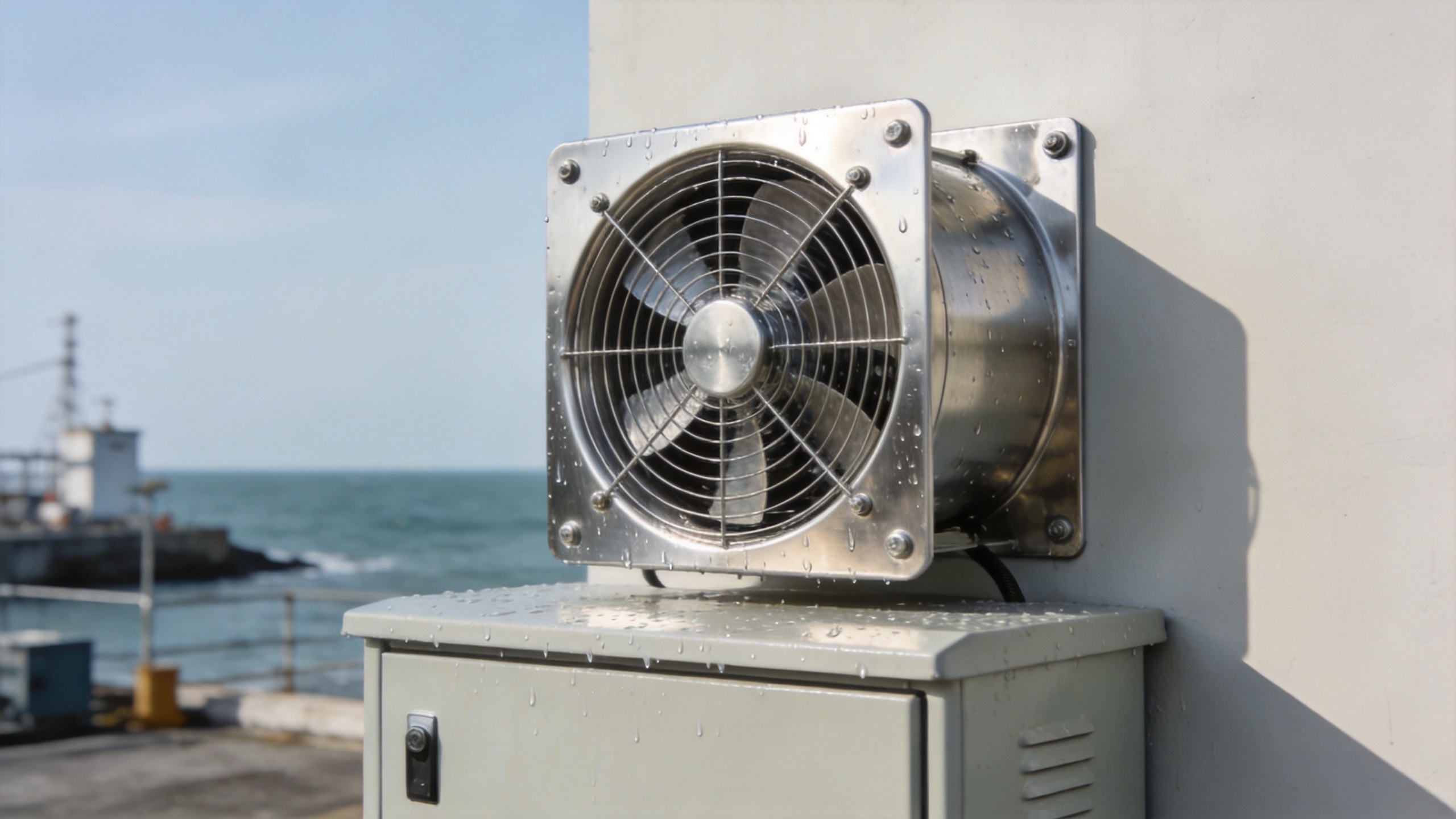
What Separates a Purpose-Built Waterproof Cabinet Cooling Fan
A purpose-built waterproof cabinet cooling fan designed for coastal use differs from a standard cabinet fan at almost every component level. The housing material, bearing type, motor winding treatment, blade construction, and sealing approach all need to work together as a system. If you assume that a high IP rating on the housing alone solves the problem, that's where many purchasing decisions go wrong, and it's worth understanding why.
The IP (Ingress Protection) rating system, defined under IEC 60529, specifies what a product has been tested to withstand. An IP65-rated outdoor electrical cabinet waterproof cooling blower has passed testing involving water jets at approximately 30 kPa directed from 2.5 to 3 meters at every angle for a minimum of three minutes per square meter. An IP66-rated unit has been exposed to more powerful jets at roughly 100 kPa with 100 liters per minute flow, a significantly more demanding standard that reflects the kind of conditions a coastal industrial installation might actually encounter during heavy rain or pressure washing events.
What the IP rating does not specify is corrosion resistance to salt. Two fans with identical IP66 ratings can have dramatically different lifespans in a saline environment depending on the materials, coatings, and bearing grease used in their construction. This is where salt fog testing standards like ASTM B117, ISO 9227, and GR487 become relevant. These protocols expose products to a continuous 5% sodium chloride salt fog mist under controlled conditions to evaluate how quickly protective coatings degrade and where corrosion initiates. Fans that have passed these tests have a documented basis for claiming salt fog resistance; fans that only carry IP ratings have not been specifically evaluated for saline corrosion.
Material Selection and Coating Strategies
For a corrosion resistant ventilation fan intended for coastal cabinet cooling, material selection matters as much as the IP rating. Housing materials in common use include:
- ABS plastic: Dimensionally stable, naturally non-conductive, and resistant to most salt-water corrosion. Widely used for fan housings in light-to-medium industrial applications where direct salt spray isn't constant.
- Stainless steel (304 or 316): The preferred choice for the most aggressive coastal environments. Grade 316 offers superior chloride resistance due to its molybdenum content and is standard practice for marine and offshore applications.
- Treated aluminum: Anodized or powder-coated aluminum provides good corrosion resistance at a lower weight than stainless steel, though it requires careful attention to coating integrity at cut edges and mounting holes where galvanic corrosion can initiate.
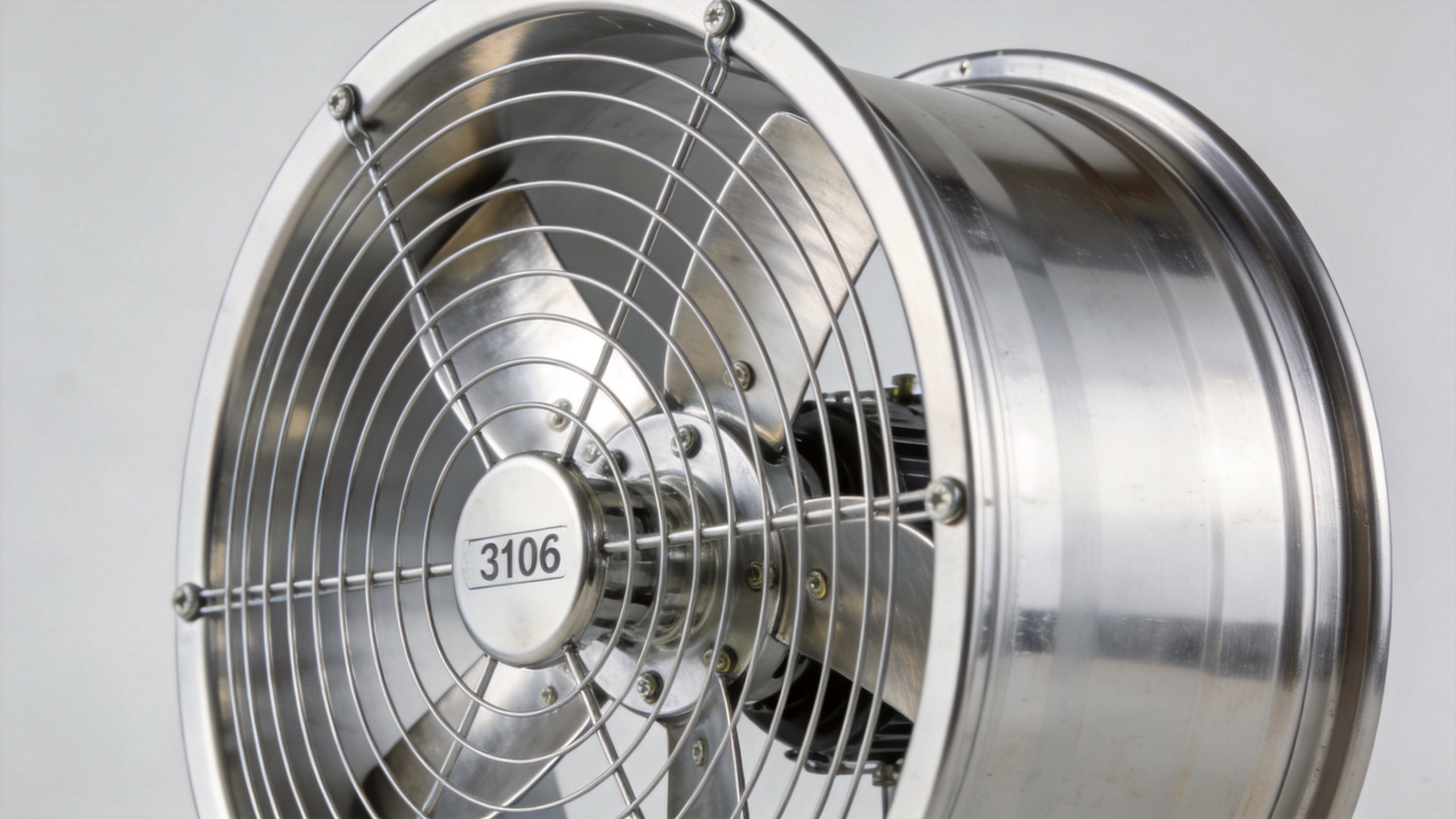
For motor and PCB components inside the fan, conformal coating — typically a thin layer of acrylic, polyurethane, silicone, or Parylene — provides an additional moisture and corrosion barrier. Research on ip65 waterproof dustproof outdoor industrial axial cooling fans deployed in high-salinity coastal zones indicates that Parylene-coated units typically maintain coating integrity for three to five years before salt ion penetration becomes a maintenance concern. Acrylic and polyurethane coatings may require more frequent inspection in severe environments. If your application involves near-constant salt fog exposure, this cycle should factor into your total cost of ownership calculation, not just the initial purchase price.
Bearing and Motor Sealing: The Hidden Factor in Long-Term Stability
Bearings are often the first component to fail in coastal fan installations. Standard open bearings allow grease to migrate out and moisture to migrate in. Ball bearing construction with sealed cartridges retains lubricant under vibration and thermal cycling while physically blocking salt-laden moisture from reaching the bearing races. For cabinet cooling fans that run continuously — potentially 24 hours a day in telecom or utility cabinet applications — sealed ball bearings are a functional requirement rather than a premium option.
Motor winding insulation is the other critical vulnerability. In a standard motor, the winding lacquer provides some protection, but salt ions that reach the winding surface can still cause tracking failures and short circuits over time. Double-insulated windings or motors with potted windings (where the winding assembly is embedded in a protective resin) are significantly more resistant to this failure mode. Some manufacturers validate this with salt fog endurance testing per GR487 or ASTM B117. If a supplier cannot provide test documentation for their motor winding protection in saline conditions, that's a meaningful gap in product specification.
Airflow Design and Ventilation Strategy in Coastal Cabinets
Have you ever replaced a fan only to find the thermal problem persists? That's often a sign the root issue is airflow path design, not the fan specification itself. Even a well-specified waterproof cabinet cooling fan will underperform if the cabinet ventilation strategy isn't correct. A few considerations that come up repeatedly in coastal industrial installations:
- Positive or negative pressure configuration: Fans configured to create positive pressure inside the enclosure (blowing in filtered air) can reduce infiltration of unfiltered salt air through gaps. This matters especially for enclosures not fully sealed to IP66+ that rely on the fan as their primary environmental control.
- Filter media selection: Standard polyester filter pads that work well in clean indoor environments can become hygroscopic and salt-contaminated in coastal settings, progressively blocking airflow. Salt-resistant or hydrophobic filter media with appropriate replacement cycles are worth specifying from the outset.
- Thermostat-controlled operation: Running fans only when cabinet internal temperature exceeds a threshold reduces total operating hours and therefore slows bearing and coating wear, a meaningful life extension strategy in environments where the fan can't be protected from exposure during off cycles.
Selecting the Right Specification for Your Application
If your application involves an outdoor electrical cabinet within roughly two kilometers of a coastline or in any industrial zone with measurable salt fog exposure, the baseline specification should include IP65 as a minimum — with IP66 preferred for enclosures in more exposed locations. The fan should carry documented salt spray test results (GR487, ASTM B117, or ISO 9227) in addition to its IP rating. Sealed ball bearings, conformal-coated PCBs, and stainless steel or properly treated housing material complete the specification baseline.
Manufacturers that specialize in cabinet cooling fans for industrial and outdoor applications — rather than treating waterproof fans as a niche variant of a general product line — tend to have more rigorous documentation available for the above specifications. If a supplier can provide actual salt fog test reports, bearing lifespan data at operating temperature, and a clear explanation of how the winding protection was validated, that level of technical transparency is a meaningful indicator of product quality, not just a marketing claim.
For trading companies sourcing cabinet cooling fans for European markets, CE certification and compliance documentation aligned with the relevant EMC and LVD directives is also a standard requirement. Fans that have been properly CE-certified will typically have gone through more systematic electrical safety and protection class validation than products that carry only self-declared markings.
The coastal salt fog environment is genuinely demanding — but it's a well-understood engineering problem with documented solutions. A properly specified waterproof cabinet cooling fan, matched to a well-designed ventilation strategy, can deliver stable, long-term performance even in the most challenging coastal industrial settings.






