 EN
EN
What filter matching rule for dust proof cabinet cooling fan operating in cement factories
2026/09/30
Cement cabinets choke on dust. Learn the filter rule for an industrial cabinet cooling fan: G4/F7 media, IP rating, and pre-filter care.

2026/09/07

A control cabinet that runs hot is a silent threat to production. Choosing the right industrial cabinet cooling fan begins with reading the heat load, not the catalog. In a typical automation panel, drives and power supplies shed watts as warmth, and without steady ventilation that warmth turns into component stress. This guide walks through field experience, failure risk, working principle, relevant standards, and a practical selection checklist for electrical enclosure cooling.
Selecting an industrial cabinet cooling fan for a VFD cabinet is a design choice, not an afterthought. The failure pattern repeats across plants: a unit sized for the nameplate, not the real loss, quietly loses margin until something trips.
The first morning the maintenance lead noticed the VFD cabinet running warm was unremarkable. Ambient had crept to 38°C, the line was at full output, and the existing ventilation relied on a small axial fan past its service life. The industrial cabinet cooling fan originally specified had been a low-cost unit with sleeve bearings; after two summers it had lost speed. Heat dissipation inside the enclosure no longer kept pace with the inverter's losses. Operators reported intermittent trips that vanished after cool-down.
An undersized industrial cabinet cooling fan lets the temperature gradient inside the electrical enclosure steepen. Semiconductors age faster, contactors chatter, and thermal management margin shrinks. A weak cabinet filter fan pulls only partial air, so dust accumulates on the heatsink and makes the problem worse. The root cause was not the drive — it was inadequate, aging ventilation that could not remove heat dissipation fast enough during peak demand.
A weak industrial cabinet cooling fan cannot sustain the margin that protects the load. The cost of poor thermal management shows up as scrap, overtime, and expedited freight rather than a single line item.
Lost production minutes compound quickly. Each overheat event risks a fault on the automation panel and a stoppage that cascades down the cell. Replacing a scorched drive costs more than the fan that should have prevented it. Risk control starts with sizing, not salvage. A correctly chosen cabinet filter fan protects the larger, far more expensive electrical enclosure contents.
Factory floors are dirty. Without rated sealing, fine dust coats components and insulators lose margin. IP54 dust protection limits solid ingress and offers splash resistance, which matters for washdown or humid spaces. The IEC 60529 rating defines the degree of protection; pairing it with a snap-on filter keeps the air path clean. Skipping the rating to save a few dollars invites the very downtime the fan was meant to prevent.
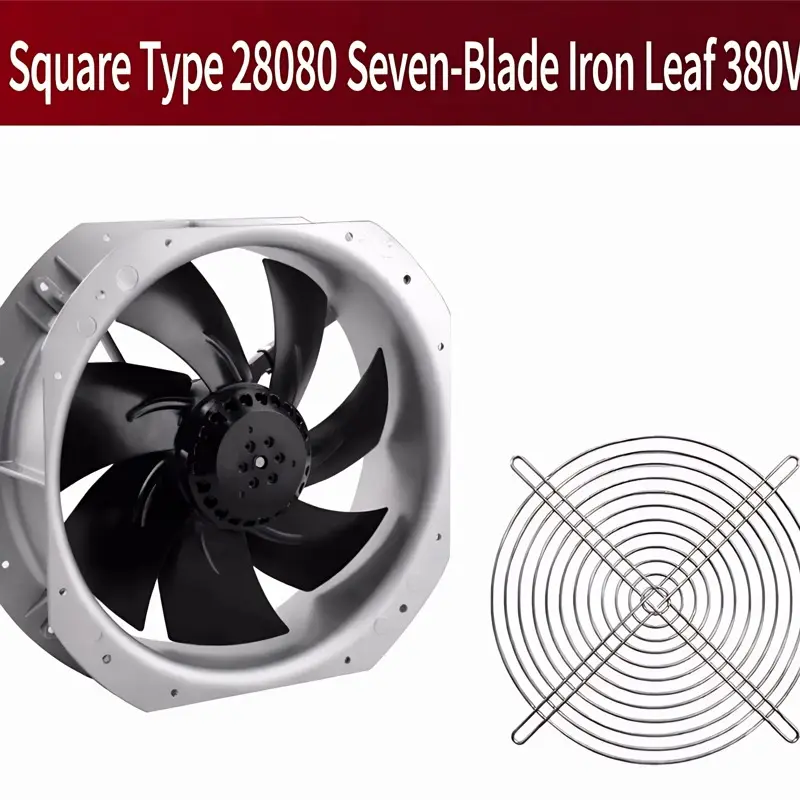
A capable industrial cabinet cooling fan relies on centrifugal airflow and a robust motor rather than a thin plastic impeller. Understanding the working principle makes specification auditable instead of guesswork.
A cabinet filter fan draws room air through a washable filter and pushes it across the internal load. Centrifugal airflow sustains pressure against resistance from filters and dense component layouts. The outer rotor motor places the rotor outside the stator, giving a short, stiff shaft and smooth running. Precision ball bearing assemblies tolerate continuous duty and wide temperature swing better than sleeve types, extending service life in demanding thermal management duties.
Modern units favor a brushless motor for efficiency and low electrical noise. A tool-free snap-on filter simplifies cleaning and keeps maintenance brief. Built-in overheat protection opens the winding circuit if temperature exceeds the limit, preventing thermal runaway. Sizing the airflow CFM to the enclosure heat load — not to a guess — keeps the internal rise within a safe band and protects the electronics throughout the duty cycle.
Airflow CFM is derived from the heat to be removed and the allowed temperature rise. Estimate watts lost, divide by the specific heat capacity of air, and convert to a volumetric rate at the expected inlet condition. Add margin for filter clogging and hot ambient. A verified calculation beats intuition: under-spec and the cabinet heats; over-spec and bearing noise and power draw climb without benefit. Match the fan curve to the real electrical enclosure resistance.
An industrial cabinet cooling fan backed by recognized standards earns trust during procurement review. References give engineers a common language to verify claims instead of relying on a datasheet photo.
Credible cooling rests on references buyers can verify. IEC 60529 sets the IP code that defines ingress protection for the enclosure fan. IEC 60034 covers rotating electrical machines, including motor temperature rise and insulation. NFPA 79 addresses electrical standards for industrial machinery, while EN 60204-1 governs machine electrical equipment safety. UL 1004 applies to motors and controllers, and OSHA 29 CFR 1910 frames workplace electrical safety. NFPA 70, the NEC, sets wiring methods that the installation must respect.
Buying the right industrial cabinet cooling fan is only half the task. Verify the IP rating against the site, confirm the airflow CFM against the calculated load, and check the bearing type and filter access before purchase. On arrival, inspect the impeller, windings, and label data. In service, clean the snap-on filter on a schedule tied to dust load, log running temperature, and replace the unit at the first sign of speed loss. A disciplined routine keeps heat dissipation stable and the automation panel online.
Question: What does a cabinet cooling fan actually do? Answer: An industrial cabinet cooling fan moves filtered room air through a sealed electrical enclosure to carry heat away from drives, power supplies, and contactors. It sustains a safe internal temperature by balancing airflow CFM against the heat load. Proper ventilation prevents component drift, reduces fault trips, and extends service life in demanding factory conditions where dust and heat stay constant.
Question: Why does IP54 dust protection matter in a factory enclosure? Answer: IP54 dust protection limits solid-particle ingress and resists splashing water, which is vital where grinding dust, fibers, or washdown occur. Without a rated seal, fine contamination coats heatsinks and insulators, accelerating failure. A cabinet filter fan with IP54 rating keeps the internal air path cleaner and the electrical enclosure safer. Matching the rating to the site condition is a basic risk-control step.
Question: How should airflow CFM be sized for a VFD cabinet? Answer: Sizing airflow CFM starts with the total watts the VFD cabinet must reject, including drive and reactor losses. Divide that heat by the allowed temperature rise and air density to get a volumetric rate. Add margin for filter clogging and high ambient. Confirm the cabinet filter fan curve meets the resistance of the electrical enclosure so the target internal temperature holds under peak load.
Question: Can a cabinet filter fan run continuously in hot ambient? Answer: A cabinet filter fan with a brushless motor and precision ball bearing can run continuously, even in elevated ambient, provided the rated temperature range covers the site. The outer rotor motor and overheat protection help it survive duty cycles that would stall a sleeve-bearing unit. Still, clean the snap-on filter on schedule and verify airflow CFM, because continuous operation depends on the air path staying clear of dust.
Question: Where is overheat protection most needed on an automation panel? Answer: Overheat protection matters most on the automation panel sections holding the VFD and servo drives, since those shed the most heat and fail expensively. Place protection where the temperature rise is steepest and the load runs longest. A cabinet filter fan with built-in overheat protection guards the electrical enclosure even if the schedule slips, reducing the chance of a silent thermal runaway during peak production.
2026/09/30
Cement cabinets choke on dust. Learn the filter rule for an industrial cabinet cooling fan: G4/F7 media, IP rating, and pre-filter care.

2026/10/07
Right wall-mount height for an industrial axial exhaust fan: room volume, free clearance, brackets, and recirculation control.

2026/10/08
An ec motor fan links to BMS via Modbus, 0-10V and PWM for demand-based cooling, energy scheduling and automatic sensor-driven speed control.

2026/10/06
A radial exhaust fan removes grease, fumes, and odors from food-processing workshops with capture velocity and hygienic washdown design.

2026/10/05
Learn antistatic treatment for industrial cabinet cooling fan in electronics workshops—ESD-safe housing, ionizable plastics, and cleanroom compatibility.

2026/10/04
Discover how a brushless dc servo delivers precise wind speed control for laboratory cooling fans with closed-loop PID feedback and laminar airflow.
