 EN
EN
What filter matching rule for dust proof cabinet cooling fan operating in cement factories
2026/09/30
Cement cabinets choke on dust. Learn the filter rule for an industrial cabinet cooling fan: G4/F7 media, IP rating, and pre-filter care.

2026/09/07
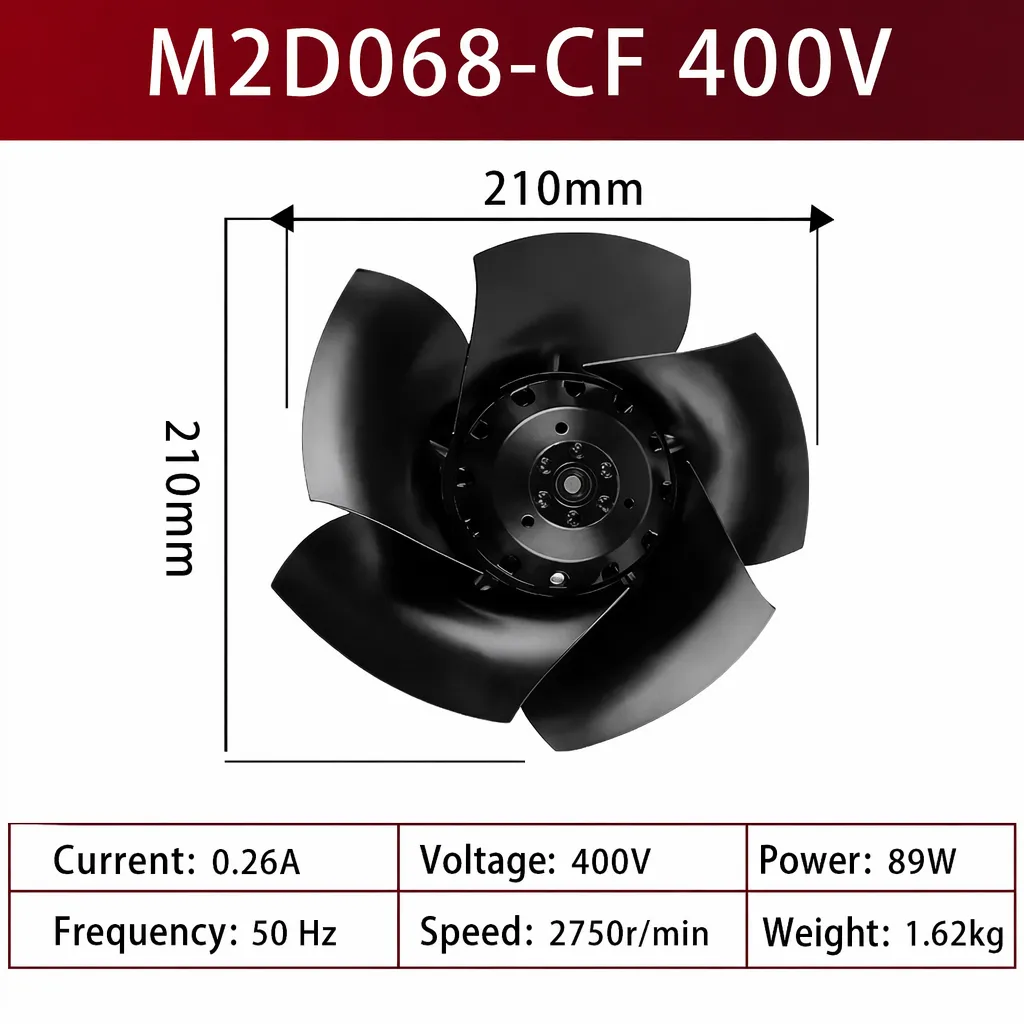
A dense server rack today packs more compute than an entire room did a decade ago, and every watt of power eventually becomes heat. When ventilation cannot keep pace, component temperatures climb and reliability falls. A high airflow server room cooling fan is a baseline requirement for stable operation, moving enough air to carry heat away before it accumulates inside the enclosure.
Thermal runaway begins quietly and escalates fast. As a server rack draws more current under load, internal temperature rises, and hotter semiconductors leak additional current, which generates still more heat in a self-reinforcing cycle. A high airflow server room cooling fan interrupts that loop by replacing trapped warm air with cooler room air several times each minute. The decisive factor is sustained volume: a high CFM fan keeps the exchange rate above the threshold where heat accumulates faster than it dissipates. Without enough movement, hot spots form near power supplies and at the top of the cabinet.
Those zones push adjacent components past their rated operating range and trigger protective shutdowns. Consistent airflow flattens the temperature gradient, keeping every device inside the data cabinet within a safe band and protecting service life.
CFM measures the volume of air a fan moves each minute, but volume alone does not assure effective cooling. Static pressure describes the fan's ability to push air through filters, baffles, and densely packed equipment. When comparing options, a high airflow server room cooling fan with strong static pressure holds its rated CFM even as filters begin to load. A high CFM fan with low static pressure may stall behind a loaded rack, while a balanced design maintains flow where it matters most.
Specifiers should match the performance curve to the cabinet. Filters and mesh add resistance, so the chosen data cabinet fan needs headroom on the pressure axis. Measuring inlet and outlet temperature difference confirms that real airflow reaches the load rather than short-circuiting around it.
Heat load is the total watts that equipment converts into warmth. Cooling capacity must exceed that figure with margin for summer peaks and gradual filter clogging. A high airflow server room cooling fan sized with margin holds the data cabinet safely below its limits during peak load. A common mistake is sizing a fan to the cabinet's free-air rating instead of the installed load, so the buffer for transient spikes and slow dust buildup disappears and the rack mount environment drifts upward after commissioning.
Airflow management decides whether moved air actually cools the load. In a shared room, warm exhaust can recirculate straight back into the inlet, defeating the fan. Hot aisle and cold aisle layouts keep supply and return paths apart, so the server rack breathes cool air instead of its own exhaust. Simple measures add up: blanking panels fill empty rack spaces, raised cable management avoids blocking the fan, and short exhaust ducts route warm air away from the cabinet.
These steps multiply the effect of a well-chosen high CFM fan without adding power draw, and they keep the data cabinet inlet temperature predictable.
Many cabinets run without a planned shutdown window, so a single fan failure can raise temperature within minutes. Pairing a high airflow server room cooling fan with a standby unit removes the single point of failure during maintenance. Redundancy means a second unit carries the load during maintenance or failure, preventing an unplanned trip. A practical approach pairs fans or runs a standby that spins up on a temperature alarm. For a critical data center cooling loop, redundancy turns a single point of failure into a managed event, protecting uptime without constant attendance.
Axial fans move large volumes at low pressure, suiting open cabinets with light resistance. Centrifugal types develop higher static pressure, pushing air through filters and long ducts. The right choice depends on the cabinet's internal layout and how restricted the path is. For most sealed enclosures a high airflow server room cooling fan in centrifugal form sustains pressure through the filter as it loads. For a ventilated rack with short paths, an axial high CFM fan is efficient and quiet. Matching the geometry to the duty avoids both stall and wasted energy, and it keeps the server rack temperature even across all shelves.
Industrial cabinets sit in dusty, sometimes damp spaces. Ingress protection rated to IEC 60529 keeps debris from the motor and bearings. A snap-on, washable filter simplifies upkeep, while ball bearings and pure-copper windings support long service between interventions. Rack mount dimensions, voltage, and connection type must match the panel. A unit documented to IEC 60034 for rotating machines and built under an ISO 9001 process gives procurement a verifiable baseline. Electrical safety aligns with NFPA 79 for industrial machinery and EN 60204-1 for machinery electrical equipment, and voltage compatibility follows ANSI C84.1 for power ratings, which keeps the data cabinet fan compliant from the start.

A high airflow server room cooling fan sits at the center of any dependable heat plan. It prevents thermal runaway, supports airflow management, and sustains cooling capacity against a rising heat load. Selecting by CFM, static pressure, and redundancy, then confirming IP protection and rack mount fit, keeps a server rack and data cabinet within safe limits. For procurement the practical path is clear: measure the real load, choose balanced airflow, require documented standards, and plan maintenance. A well-specified data cabinet fan protects equipment, avoids unplanned stops, and keeps the data center cooling effort predictable from day one, while ventilation discipline and redundancy together defend uptime.
Question: What does a high airflow server room cooling fan actually do inside a cabinet? Answer: It replaces trapped warm air with cooler room air several times per minute, carrying heat away from processors, power supplies, and drives. By keeping the air exchange rate above the heat-buildup threshold, it prevents hot spots and protects component service life. The result is a flatter temperature profile across every shelf of the rack, which supports stable and predictable operation.
Question: Why does static pressure matter as much as CFM? Answer: CFM shows air volume, yet filters, baffles, and packed equipment add resistance that can stall a low-pressure fan. Static pressure is the force that pushes air through that restriction, so a fan with strong pressure holds its rated flow as the filter loads. Matching both values to the cabinet keeps real cooling steady instead of falling off under duty.
Question: How should redundancy be planned for a cabinet fan? Answer: Cabinets running without a shutdown window need backup. A second fan or a standby unit that starts on temperature alarm carries the load if the primary stops. This removes the single point of failure and protects uptime during maintenance. For critical data center cooling, redundancy turns a fault into a managed event rather than an unplanned trip.
Question: Can a data cabinet fan run in a dusty environment? Answer: Yes, with the right protection. Ingress ratings to IEC 60529 keep dust from the motor and bearings, while a snap-on washable filter catches particles before they enter. Ball bearings and pure-copper windings support long service between cleanings. Regular filter washing restores airflow, so the enclosure stays cool even on a factory floor with constant airborne debris.
Question: Where does hot aisle and cold aisle separation help most? Answer: It helps most in shared rooms where several racks exhaust into the same space. Keeping supply and return paths apart stops warm air from recirculating into the inlet. Blanking panels and routed ducts reinforce the split, so the server rack draws cool supply air. The measure multiplies the effect of the fan without extra power, keeping inlet temperature stable.

2026/09/30
Cement cabinets choke on dust. Learn the filter rule for an industrial cabinet cooling fan: G4/F7 media, IP rating, and pre-filter care.

2026/10/07
Right wall-mount height for an industrial axial exhaust fan: room volume, free clearance, brackets, and recirculation control.

2026/10/08
An ec motor fan links to BMS via Modbus, 0-10V and PWM for demand-based cooling, energy scheduling and automatic sensor-driven speed control.

2026/10/06
A radial exhaust fan removes grease, fumes, and odors from food-processing workshops with capture velocity and hygienic washdown design.

2026/10/05
Learn antistatic treatment for industrial cabinet cooling fan in electronics workshops—ESD-safe housing, ionizable plastics, and cleanroom compatibility.

2026/10/04
Discover how a brushless dc servo delivers precise wind speed control for laboratory cooling fans with closed-loop PID feedback and laminar airflow.
